
 1-416-616-8106
 mmheatingcooling@gmail.com
  Get A Quote
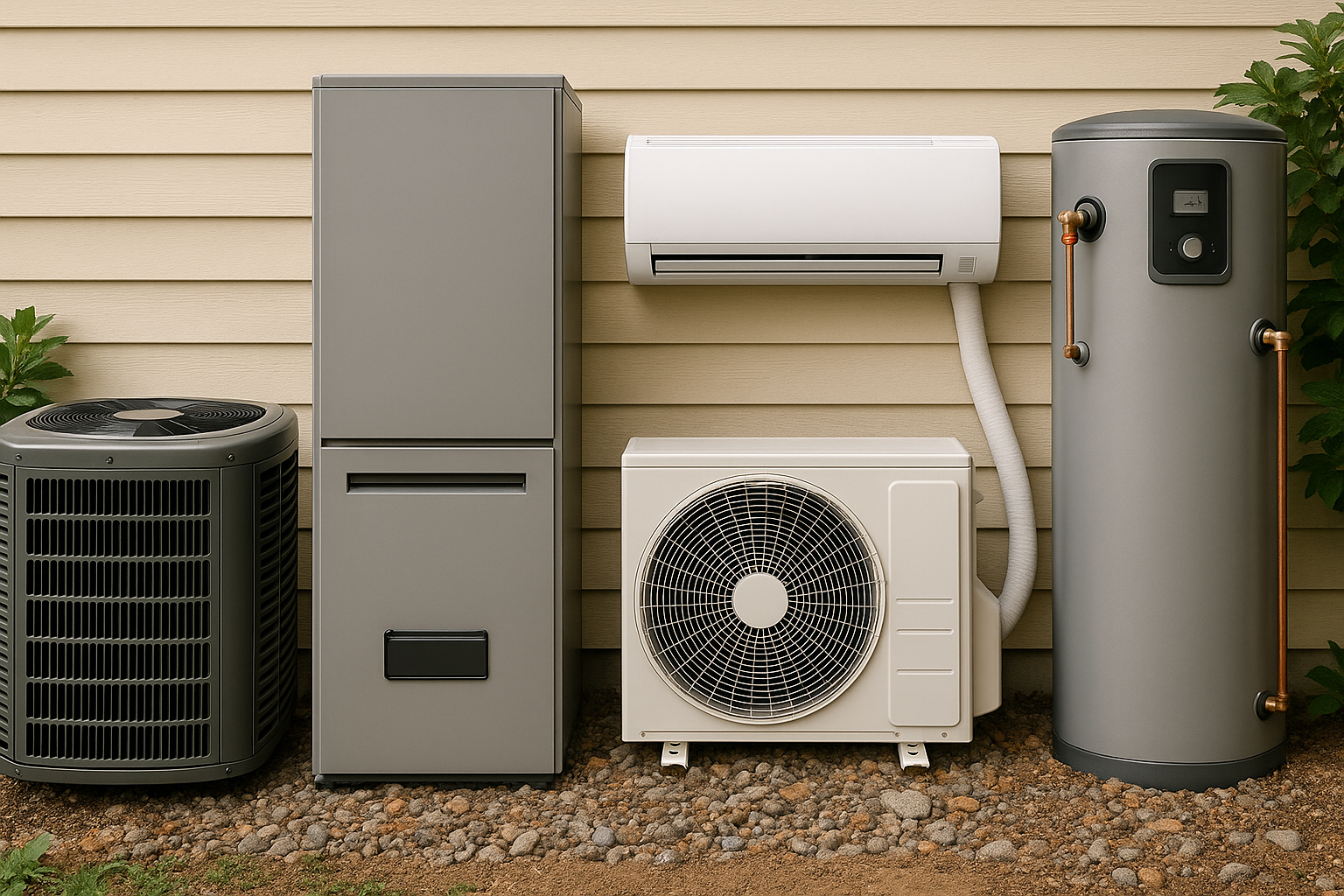
Heating, Ventilation, and Air Conditioning (HVAC) heating and cooling systems are designed to provide comfortable indoor temperatures, improve air quality, and regulate humidity throughout the year. Modern HVAC systems use various heating and cooling technologies to meet the needs of homes and commercial buildings.
Understanding the different types of heating and cooling systems can help homeowners and property owners choose the right solution for comfort, efficiency, and long-term energy savings.
What Is an HVAC System?
An HVAC system is a combination of equipment that controls indoor temperature, ventilation, and air quality. It typically consists of a heating system, a cooling system, ductwork or air distribution components, and thermostatic controls.
The primary goal of an HVAC system is to maintain a comfortable indoor environment regardless of the season.
Types of HVAC Heating Systems
Furnaces
Furnaces are one of the most common heating systems. They generate heat and distribute warm air throughout the home using a blower and ductwork.
Types of furnaces include:
- Natural gas furnaces
- Propane furnaces
- Electric furnaces
- Oil furnaces
Modern high-efficiency furnaces can provide reliable heating while reducing energy consumption.
Boilers
Boilers heat water and distribute warmth through radiators, baseboard heaters, or radiant floor heating systems.
Benefits of boiler systems include:
- Quiet operation
- Consistent heating
- Excellent comfort levels
- Reduced air circulation and dust movement
Hydronic Radiant Floor Heating Systems
Hydronic radiant floor heating systems circulate heated water through tubing installed beneath the floor. The heat rises evenly throughout the room, creating a comfortable and energy-efficient indoor environment.
Benefits of radiant floor heating include:
- Uniform heat distribution
- Improved energy efficiency
- Quiet operation
- Enhanced indoor comfort
- No visible vents or radiators
Hydronic radiant floor heating is becoming increasingly popular in both new construction and renovation projects because of its comfort and efficiency.
Electric Heating Systems
Electric heating systems use electric resistance to generate heat and may include:
- Electric baseboard heaters
- Electric radiant panels
- Electric furnaces
These systems can be effective in smaller spaces or regions with moderate heating demands.
Types of HVAC Cooling Systems
Central Air Conditioning Systems
Central air conditioning systems cool the entire home through a network of ducts and vents. They are commonly paired with a furnace to provide year-round comfort.
Benefits include:
- Whole-home cooling
- Consistent temperatures
- Improved humidity control
- Convenient thermostat operation
Ductless Mini-Split Systems
Ductless mini-split systems consist of an outdoor unit connected to one or more indoor air handlers. They provide both heating and cooling without requiring ductwork.
Advantages include:
- Energy efficiency
- Zoned temperature control
- Quiet operation
- Flexible installation options
Heat Pumps
Heat pumps provide both heating and cooling by transferring heat between the indoors and outdoors. They can efficiently maintain indoor comfort in many climates.
Benefits include:
- Energy-efficient operation
- Heating and cooling in one system
- Lower operating costs
- Reduced environmental impact
Packaged HVAC Systems
Packaged systems contain the heating and cooling components in a single outdoor unit. These systems are often used in homes with limited indoor mechanical space.
Hybrid HVAC Systems
Hybrid systems combine two heating sources, such as a gas furnace and an electric heat pump, to maximize energy efficiency and comfort depending on outdoor temperatures.
These systems automatically switch between heating sources to optimize performance and reduce energy costs.
Ventilation and Indoor Air Quality Components
In addition to heating and cooling equipment, HVAC systems may include:
- Air filtration systems
- Humidifiers and dehumidifiers
- Ventilation systems
- Air purifiers
- Smart thermostats and zoning controls
These components help improve indoor air quality and overall comfort.
Choosing the Right HVAC System
The best heating and cooling system depends on several factors, including:
- Home size and layout
- Climate conditions
- Energy efficiency goals
- Budget
- Existing infrastructure
- Comfort preferences
Working with an experienced HVAC contractor can help determine the most suitable system for your property.
Final Thoughts
HVAC heating and cooling systems come in many forms, including furnaces, boilers, hydronic radiant floor heating systems, central air conditioning, ductless mini-splits, and heat pumps. Understanding how each system works can help homeowners make informed decisions that improve comfort, increase energy efficiency, and reduce long-term operating costs.